Most small business owners want to do less work and make more money. Based on our experience here is what to outsource in 2026 so you do less work.
There is a defining moment for every founder when the workload shifts from manageable to crushing. You started your business to build something valuable; however, you often end up buried in administrative detritus that drains your energy. It is a classic trap that stifles growth and leads to burnout. The solution is not to work harder; it is to strictly identify the tasks you should never do yourself.
What Should You Outsource?
Deciding what to outsource can be paralyzing when you are accustomed to wearing every hat. You need a simple framework to evaluate your to-do list. I generally look for three specific types of work that are prime candidates for outsourcing.
High-Stakes and Regulated Tasks
The first category includes tasks that involve heavy regulation, specific structures, and rigid systems. These are areas where a mistake can cost you significant money in fines or legal fees.
Payroll
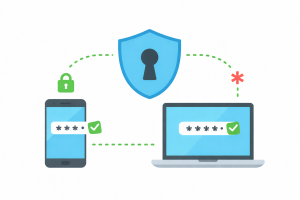
Payroll is the ultimate example here. It is fraught with legal complexities, changing tax tables, and strict deadlines. Trying to manage this yourself is a liability. Platforms like OnPay or Gusto are essential. Cloud payroll platforms handle the heavy lifting for you.
Research from Ernst & Young indicates that organizations relying on manual, non-automated payroll processes can expect an error rate as high as 20 percent; furthermore, it costs an average of $291 to rectify just one of these errors.
Here are the benefits of using a payroll company rather than trying to manage it manually:
- They automatically calculate and file your federal, state, and local payroll taxes.
- They manage year-end reporting like W-2s and 1099s.
- They provide a portal for employees to view their own pay stubs and tax forms.
- They keep you compliant with changing labor laws and regulations.
- They free up your schedule so you do not have to calculate withholdings every two weeks.
Bookkeeping
Bookkeeping falls into this same bucket. You might think you are saving money by manually entering receipts; in reality, you are likely missing deductions or risking compliance errors. Tools like QuickBooks and Xero are industry standards that keep your finances audit-ready. If you’re like me you’ll also want a person who does this better and faster. I found my bookkeeper on Upwork and couldn’t be happier.
I learned these lessons the hard way. In the early days, I insisted on managing the books myself. I told myself I needed to stay close to the numbers; truthfully, I was just being cheap.
The result was a disaster. I spent countless weekends drowning in receipts and spreadsheets. I missed deadlines because I was too busy with client work, ending up paying penalties that cost far more than a bookkeeper would have. I also missed out on strategic insights because my data was never up to date.
Banking
In addition to payroll and bookkeeping, managing your technical infrastructure and financial transfers often falls into this category. If you are handling international payments for contractors, using a traditional bank can be slow and expensive. Wise allows you to send and receive money at the real exchange rate; this ensures more of your capital stays within the business. We’ve been using it since it was called Transferwise and it has continually increased in value for us. We started using it as a way to pay one vendor overseas. We now use it for multiple vendors and to receive payments from global customers when our local bank won’t do.
Legal and Contractual Needs
Legal documentation is another area where “good enough” is rarely good enough. You need solid contracts for employees, contractors, and terms of service. For standard documents, you do not always need an expensive retainer. Services like Legal Templates and LegalZoom.com offer robust libraries of vetted documents that cover most general business needs.
However, you must know where to draw the line. When you are dealing with complex intellectual property issues, patents, or high-stakes litigation, you should always reach out to a qualified attorney. Automated services are excellent for the routine work; they cannot replace the strategic counsel of a human lawyer when your core assets are at risk.
Low-Value Repetitive Work
The third category is work that you could theoretically train someone to do in a day or two. These are often small, repetitive tasks that involve data entry, scheduling, or answering the same basic customer questions repeatedly. While these tasks are necessary, they do not require your specific expertise or strategic mind.
You can easily find help for these roles on marketplaces like Upwork or Fiverr Pro. By documenting your process once, you can hand off hours of weekly work and free yourself up to focus on strategy. There are benefits and drawbacks to how each of these work for outsourcing, but they are incredibly valuable tools.
Over 65 percent of small and medium-sized businesses now outsource at least one virtual assistant function; notably, startups with fewer than 10 employees have the highest adoption rate at 85 percent.
In my experience, bringing someone onto your team that focuses on work like bookkeeping, you can benefit from their insights. They likely work for other companies and will share their learning about how to use Xero or Quickbooks, but also bring some best practices to the work.
What Stops Small Businesses From Outsourcing?
If the logic is so clear about what to outsource, why do we hesitate? There are three main psychological barriers that limit small business owners who know what to outsource from freeing up time.
The Efficiency Fallacy
The most common barrier is the belief that nobody can do the job as well as we can. We convince ourselves that it will take longer to explain the task than to just do it ourselves. This is a short-term view that guarantees long-term stagnation. While it might take an hour to train someone today, it saves you hundreds of hours over the next year.
The Cost Myth
When cash flow is tight, spending money on a bookkeeper, payroll service, or virtual assistant feels like a luxury we cannot afford. We look at the monthly fee and recoil. You have to reframe this expense as an investment in your own capacity. Every hour you spend classifying transactions is an hour you are not selling, building, or leading. The opportunity cost of your time is almost always higher than the hourly rate of a specialist.
The Fear of Losing Control
Handing over the keys to your bank account or your customer inbox feels dangerous. We worry that an outsider will not care as much as we do. This is why you start with systems that have oversight, like using payroll software where you approve the final run, or giving limited access to a virtual assistant. Trust is built in stages; however, you must start building it to grow.
Starting Doing Less Work in 2026
I’ve learned from my mistakes and my natural desire to do it all myself. Do not make the same mistake. Look at your list today and find the things you should stop doing immediately.