
While big businesses grab all the headlines, there is a very real small business tech advantage.
I’ll bet you thought this was clickbait! How can you possibly have an advantage over larger businesses?
Well, I’ve worked in both big and small and have run operations for my own business for ten years and I’m serious when I tell you that you really do have an advantage over big businesses when it comes to adopting technology.
Strategic Tech Advantages for Small Business
These may not all apply to your business, but I would bet that you can find more than half of these small business tech advantages apply to you. Use them to your advantage because your larger competitors often have to work much harder to make changes and implement new technologies.
- Rapid Experimentation: Smaller firms can quickly implement new ideas or deploy new features without the lengthy approval processes that slow down larger organizations.
- Fewer (no?) Layers of Bureaucracy: Flatter structures allow leaders to make high-level decisions within days or even hours; whereas large corporations may require sign-offs from multiple committees.
- Direct Customer Feedback Loops: You know your customers by name! Small business leaders are more directly connected to their customers, which allows them to gather valuable feedback through social media or direct service interactions and adjust their offerings swiftly.
- Lower Risk of Brand Impact: While large brands must worry about every minor change affecting a massive reputation, small businesses can experiment boldly and use technology to pivot their entire business model to align with new opportunities.
- No Complex Technological Debt: Without the burden of complex legacy systems, small businesses can adopt emerging technologies like AI-driven chatbots or cloud-based analytics more readily than enterprises tied to older infrastructure and big customer requirements. I’ve worked in organizations that kept old database structures because of a custom feature created for one customer
- Niche Market Mastery: Small businesses can use data to develop a premium reputation in a narrow market, creating highly personalized products or services that address specific customer requests at a moment’s notice.
- Global Reach with Minimal Overhead: Technology allows a small team to project a professional presence and sell products globally via e-commerce and digital marketing without the need for a physical storefront.
Tactics to Leverage Your Small Business Tech Advantages
If you agree with me that any or all of the above tech advantages for small businesses are true, that’s a great starting point. But it isn’t enough. You need strategies to leverage these small business tech advantages.
By leveraging their size, small businesses can adopt specific technology tactics that focus on speed and low-cost validation. While larger corporations are often slowed down by rigid planning and risk mitigation, smaller teams can use these methods to move from a concept to a data-backed decision in days rather than months.
Smoke Testing
Smoke testing is a method used to verify if there is genuine market interest in a product or feature before any significant resources are spent building it. By creating a “fake door” or a simple landing page that describes a new offering, you can measure real user behavior, such as button clicks or email sign-ups, to confirm demand. This approach saves time and money by providing early signs of interest based on action rather than just theory.
Can you imagine a large brand doing this? They definitely use this approach but they certainly can’t have an idea when they wake up and be testing it by lunch.
A practical application of this is creating a landing page for a new service using Leadpages and driving a small amount of targeted traffic to it through social media ads. If visitors click a “Join the Waitlist” button at a high rate, you have verified that the idea is worth pursuing. If they do not, you can pivot your strategy immediately without having lost months of development time.
Prototype with Free Trials
Using the free trial periods of various software tools allows a small business to build a functional prototype, or Minimum Viable Product (MVP), with zero upfront software costs. This tactical tech advantage allows you to “stitch together” different platforms to prove that a specific workflow or customer experience works. It is a low-risk way to test the technical feasibility of a complex idea before committing to long-term subscriptions.
For example, you could use the free tier of Airtable to manage your data and connect it to a client portal built during the trial period of Softr. This combination allows you to show a potential client exactly how their dashboard will look and function. By the time the trial periods end, you should have enough feedback or even initial revenue to justify the cost of the full versions.
Rapid Concept Demos with AI
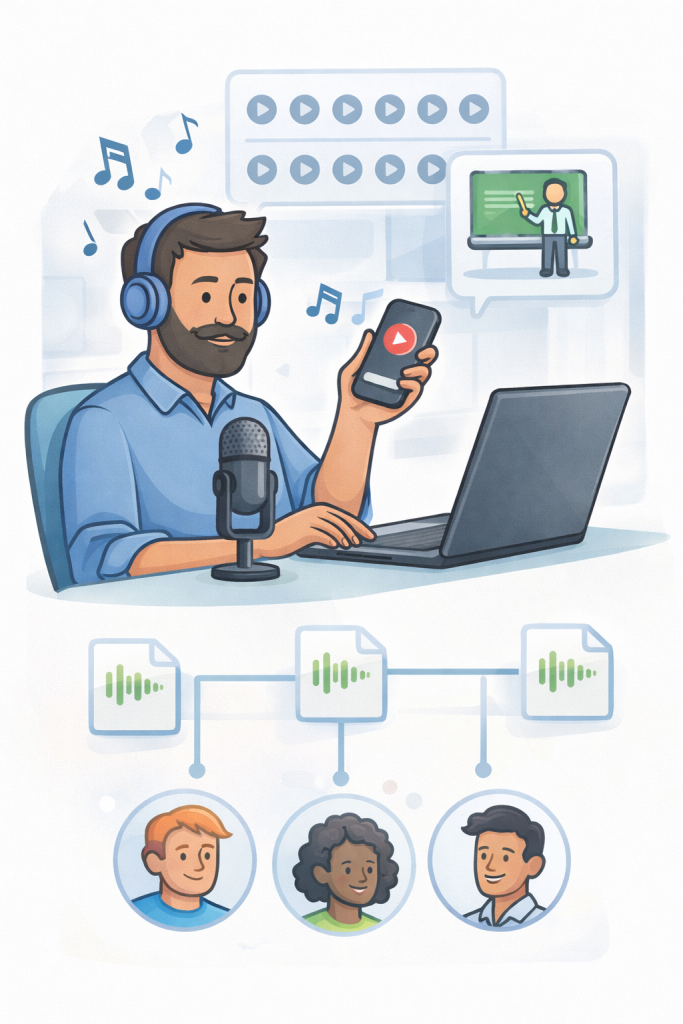
Small businesses can use generative AI to create high-fidelity demos that make a concept feel tangible and professional to early adopters or investors. This tactic bridges the gap between a “rough idea” and a “finished product” without the need for expensive recording equipment or professional talent. AI tools allow founders to multiply their output and present a polished image that rivals much larger competitors.
A founder looking to launch an educational audio series could use ElevenLabs to instantly generate several sample lessons using professional-sounding synthetic voices. Instead of describing the series to potential subscribers, the founder can send them actual audio files to listen to; gathering much more accurate feedback on the content and tone before any full-scale production begins.
Multi-Language Content
This strategy involves using AI to instantly translate and voice your marketing and educational materials into different languages to reach a wider audience. It removes the language barrier that often prevents small businesses from entering international markets. Instead of paying for expensive translation services, you can adapt your existing assets for a global scale with very little additional effort.
A creator can take their existing video tutorials and use the Dubbing feature in ElevenLabs to create versions in Spanish, French, or German. By uploading these dubbed versions to a separate YouTube channel or a localized landing page built with WordPress.com, you can start generating international leads and revenue from content you have already created.
Scale Your Agency
The invisible agency model uses a network of high-end freelance professionals and white-label services to deliver complex projects that would normally require a large staff. This allows you to bid on larger contracts and offer a wider range of services while keeping your fixed overhead extremely low. You act as the strategic lead while specialized talent handles the execution.
This is a specific small business tech advantage because you can still control the output. A large company can’t afford to do this at scale. You can use it to test the waters of growth. We go deeper into all the different ways you can scale your business.
If a client needs a comprehensive website overhaul including custom design and specialized copywriting, you can source top-tier talent through Fiverr Pro or Upwork to handle the technical work. By managing the project directly, you can provide the client with a single point of contact and a high-quality result that matches the output of a traditional mid-sized agency.
Automated Customer Success Engine
An automated success engine uses low-code workflows to handle the onboarding and education of new clients without manual intervention from the founder. This ensures that every customer receives a consistent, high-quality experience from the moment they sign up. By automating the repetitive parts of the customer journey, you free up your time to focus on high-value consulting or strategic growth.
We’re testing this concept right now with just one of the many lead magnets we have on EnduranceLearning.com. Each of these lead forms is already submitting information to us through an automation. We can quickly test out a new concept using n8n without damaging what we’re doing. If it works, we’ll roll it out to more lead magnets and probably write about it on Small Business Founder!
A practical example is connecting your payment processor to a training platform using Make or n8n. When a customer completes a purchase, the system can automatically create an account in a platform like Trainual and send a personalized welcome email through Kit. This creates a professional onboarding sequence that runs perfectly every time a sale is made.
All of this small business tech can be implemented for very little cost and show big impacts. If it doesn’t, you can scrap it!
Avoiding the Sunk Cost Fallacy
One of the most dangerous traps for any small business tech is the sunk cost fallacy; the psychological tendency to continue investing time, money, or effort into a project simply because of the resources already committed to it.
In a rational business environment, past expenditures are “water under the bridge” and should have no bearing on your future strategy, yet founders often struggle to walk away because they fear admitting failure or appearing wasteful.
Embracing the ability to test a concept and move on is a survival skill; it allows you to redirect your remaining capital and energy toward opportunities that actually have a future.
As Seth Godin, noted author and entrepreneur, explains about the sunk cost fallacy: “It doesn’t matter how much time or money or effort you’ve invested in something; if that project no longer makes economic sense, you should stop.”
Low-Risk Software Evaluation
When you embrace the fact that your small business tech advantage is that you can and will test and move on from small investments of time and money, you can start really testing new products and processes.
A critical mistake a small business can make is investing thousands of dollars in a technology that looks good on paper but doesn’t fit the actual workflow. Your small business tech advantage allows you to test tools with minimal commitment. You can try out a product for a month or two, see how it fits your needs, and then either commit fully or move on without a huge loss.
Free Trials
Free trials for software always feel like the best deal. I can tell you from the perspective of offering these free trials on products like Soapbox, to signing up for free trials, they can be great. Except for one major factor… I don’t have skin in the game. I’m not invested because it was free.
It is also critical that you don’t rely on the software to tell you that your free trial is almost over. Add it to your calendar and don’t ignore it. If you haven’t used it, cancel it!
Month-to-Month
There are a variety of pricing methods from the obscene yearly commitment (even when they let you pay monthly) to extended free trials. For the vast majority of online tools you will find the option to subscribe for 1 month. I’ve found these to be the most effective because I have skin in the game.
Before I sign up for a monthly subscription I make sure my calendar has sufficient space blocked off to work on setup and testing. If I need others on my team I try to do the same. The goal is to test as much as possible in the month that you’ve paid for.
The key is to cancel if you a) didn’t like it or b) didn’t test it. You may think “I don’t want to cancel because I didn’t get enough time to test it yet!” This is how people end up in gym memberships for decades and go once a year. If you didn’t implement it that first month, take a pause and start again.
AppSumo: Discount Software Marketplace
You can adopt a mindset that every new tool is simply a low-risk experiment. This approach helps you quickly find what works best for your specific business.
A fantastic place to start the experimentation is with AppSumo. It is a marketplace that offers deep discounts and lifetime deals on software, allowing you to try out powerful tools for a one-time, non-subscription fee. These tools can replace expensive monthly services; if they stick, you save money, and if they do not, you are only out a small upfront cost.
This is your small business tech advantage because no large business would ever take a risk on an unproven piece of software. You can bet on companies that show signs that they’ll be around and keep innovating.
I’ve had my failures and successes with AppSumo. In 2017 my team was using Buffer to schedule social media posts. It worked just fine. It was the tool that helped us push content that we created out to most social media platforms.
AppSumo Success Story: MissingLettr
Then AppSumo ran a deal for Missinglettr, a social media platform that lets you schedule a year’s worth of social media based on one blog post. I believe the cost was less than $60. I was intrigued! Social media was becoming a volume play and we couldn’t keep up. We used it for a couple of years and it increased our traffic.
We eventually decided that we could move away from Buffer and use Missinglettr’s improved features to handle all of our social media scheduling. We use social media a lot less today than we did then, but we still use the Curate feature.
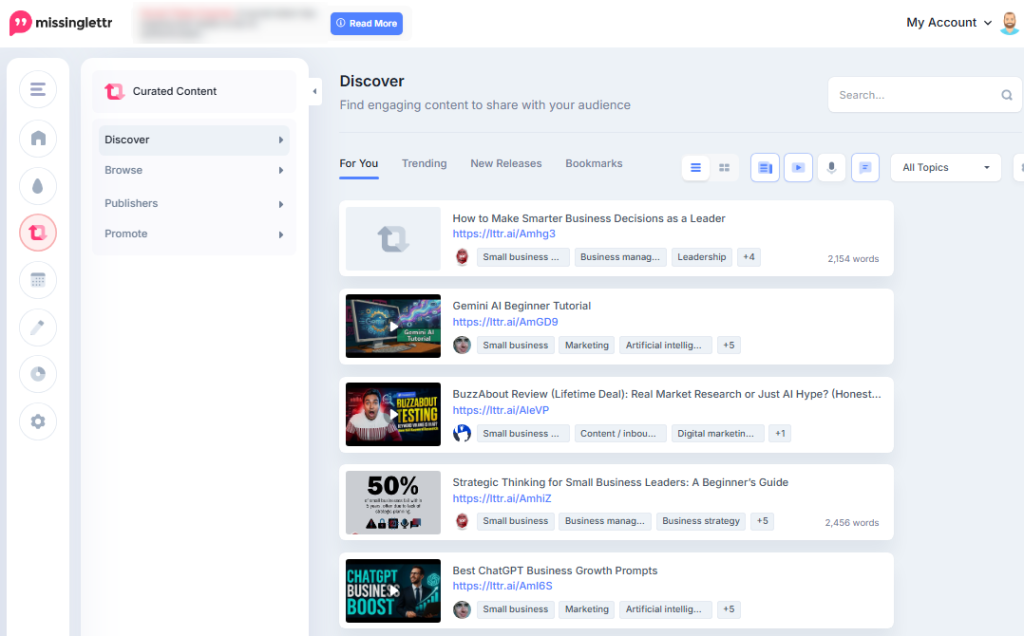
The curate function has been really powerful for promoting content in a natural way without a lot of effort. We save time finding content to post about and are able to get our content shared on social media by other users.
Don’t Sleep on Your Tech Advantages
The ultimate competitive advantage for a small business is not just the ability to move fast; it is the freedom to be wrong without it being fatal. By using low-cost automation and AI tools to validate ideas through smoke tests or rapid prototypes, you can explore more territory than any corporation bogged down by bureaucracy and the fear of brand damage.
Success in this environment requires a disciplined rejection of the sunk cost fallacy; you must be willing to walk away from a project the moment it stops making economic sense so you can pivot your resources toward what actually works.
Your small business tech advantage is that you have a lean, experimental mindset, and can outmaneuver competitors ten times your size.


