
Small Business Books
The Small Business Books That Built Endurance Learning: A Founder’s Reading List
When I co-founded Endurance Learning in 2015, I was an L&D professional, not a business owner. I had a background in tech and product management, but I knew I had a lot to learn. Knowing I had a massive knowledge gap, I turned to the best experts I could find: authors of books that lay out the fundamentals of running a successful small business.
These books weren’t just theoretical reads; they were the foundational blueprint for how we structured our finances, managed our time, designed our brand, and built our products like Soapbox +AI and the L&D Pro Academy.
These are some of the books that had the biggest impact my journey and provided the essential wisdom for building a company.
I’ve broken these into four simple categories:
- Startup Mindset: These books help you think like a successful business owner.
- Small Business Operations: These are books that help you focus on the day to day of building a successful business.
- Small Business Finance: These books address the scariest part of running a small business, finance!
- Small Business Marketing: These books give you the roadmap for marketing your business.
Startup Mindset
The Lean Startup by Eric Ries
If you’re launching anything—a new business, a new product, or even a new service line—this is required reading.
Focus on rapid iteration, frequent customer feedback, and the Minimum Viable Product (MVP). The goal is to learn what works and course-correct quickly, rather than sinking massive resources into a product no one wants.
This methodology guides our product development, especially with our technology offerings. For Soapbox +AI, we prioritized getting core, functional, and helpful tools into the hands of our users fast to gather feedback, allowing us to build the product incrementally based on real-world use. It’s all about continuous, focused learning, building, and measuring results.
Small Business Operations
Many of the small business books that have had the biggest impact on me are those that helped me get more out of my limited time.
Getting Things Done: The Art of Stress-Free Productivity by David Allen
Running a growing service-based business means juggling dozens of complex projects and communications. I first found this book because I was managing employees for the first time and had a struggling employee. I made the ill-informed decisions to buy the whole team this book and conduct a book club. The truth was that I was avoiding a tough decision with one person. This book wasn’t revolutionary but it was solid and I’ve continued to think about systems that help me get my work done more efficiently.
Getting Things Done (GTD) is a complete system for capturing, clarifying, organizing, reflecting on, and engaging with your work. The core lesson is to move ideas and to-dos out of your head and into a trusted, external system.
Buy Back Your Time by Dan Martell
Scaling a business means shifting from a doer to a strategic leader who leverages the work of others.
Instead of asking, “What can I automate?” ask, “What can I eliminate, and what can I delegate/automate?” The book provides a practical guide on calculating your personal “Buy Back Rate”, your hourly value, to justify hiring or using systems to offload tasks below that rate.
Dan helped me see that we needed to shift work to lower cost resources, including all forms of outsourcing. This was the justification for bringing on team members and using tools to eliminate the “grunt work” of instructional design.
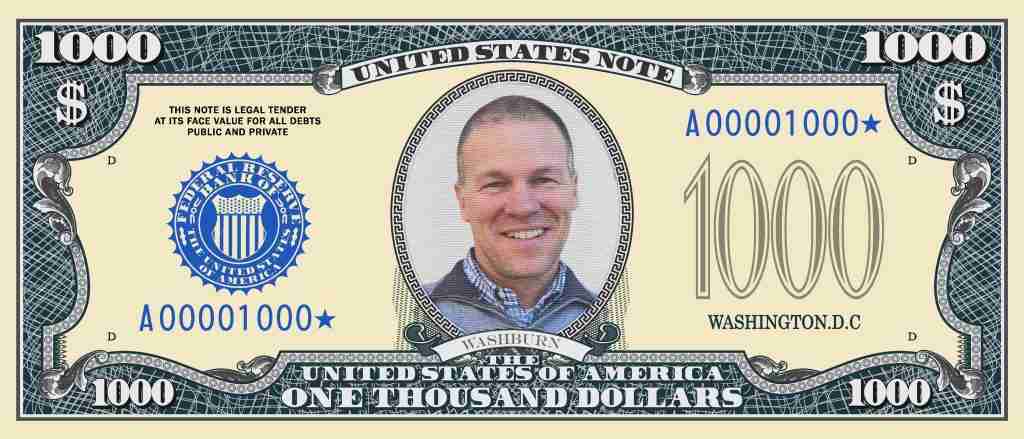
Buy Back Your Time is one of the small business books that has had the biggest impact on how I think. It helped me evolve from a full-time instructional designer to the COO who focuses on long-term strategy, brand growth, and developing scalable solutions for our customers.
One a personal, note it is why I created this image for my business partner, Brian Washburn. We need constant reminders that our time is valuable!
The Effective Executive by Peter F. Drucker
A classic that cuts through the noise of what it means to actually lead an organization.
Effectiveness can and must be learned. It requires five core practices: managing your time, choosing what to focus on, seeing every contribution through the lens of results, making effective decisions, and building on strengths.
This book instilled a principle of intentionality and measurement. It guides our strategic goal to improve the workflow from a Lead Magnet → Qualified Lead → Sales Opportunity. Ultimately, every initiative—from a new self-paced course in the L&D Pro Academy to a full custom elearning development project—must be tied to clear, measurable results for our customers and our business.
Deep Work: Rules for Focused Success in a Distracted World by Cal Newport
Multitasking is now celebrated in our culture. But is it good for getting your work done and done well? Most people have lost the ability to go deep, spending their days in a frantic blur of emails, online meetings, social media, and AI slop, not realizing there’s a better way.
In Deep Work, professor Cal Newport makes the case for reclaiming focus as a critical skill in our digital world, providing step-by step instructions for achieving this goal, including four rules for transforming your daily habits.
Small business owners are more prone than most to get stuck doing everything at once. Sometimes it is better to do one thing and do it incredibly well.
Small Business Finance
Small business finance is a category of small business books that is probably too prevalent and also really needed in small businesses.
Profit First by Mike Michalowicz
This book fundamentally changed how I think about money and profitability.
Instead of the traditional formula (Sales – Expenses = Profit), Profit First flips it on its head: Sales – Profit = Expenses. This means you take your profit first, forcing you to manage and reduce your expenses with the remaining funds.
This was a shift in the way I had thought. It all made sense to me but it didn’t match what we were doing. We still struggle at times to focus on the Profit First principles but it has helped us see our small business finances in a different way. It made us look at our business not as a cash-eating machine, but as a mechanism designed for consistent, intentional profitability. It enforced the financial discipline needed to ensure we could invest back into scalable solutions.
Small Business Marketing
I read many small business books on marketing and struggled to come up with a game plan. When you ready marketing books, make sure you’re learning from the big brands but applying on a small scale.
Marketing Made Simple by Donald Miller (StoryBrand)
We’re experts in L&D, but we needed to be just as expert in communicating our value to customers.
Stop making your customer burn calories to understand what you do. Position your customer as the hero and your brand as the trusted guide. The framework uses a simple, seven-part narrative structure to clarify your message.
Marketing Made Simple is the core of our marketing strategy. Everyone involved in marketing has read it. We use this to talk about how Soapbox +AI solves the problem of being “overwhelmed by their to do list” (the Internal Problem) and how our Train-the-Trainer programs help professionals escape the “fatal flaw” of being subject matter experts who lack facilitation skills.
Endurance Learning receives a small payment if you purchase small business books using these links. We’re excited to support purchases through Bookshop.org because they are committed to supporting local book sellers.